Focused on Your Care & Goals

Helping You Get Your Dream Shape

Breast reduction, also known as a reduction mammaplasty, is a surgical procedure that reduces symptomatically large breasts by removing glandular breast tissue, fat, and skin. Although breast reduction surgery is often performed to address medical issues or physical discomfort, any patient unhappy with the size of their breasts can choose to pursue a reduction mammaplasty. We take the time to understand any past procedures as well as take into account your family medical history in order to pick the procedure that will give you the most desirable results.

I had Dr. Vega do my breast reduction three years ago. I thank him every day of my life for my new confidence and relief! Dr. Vega is so compassionate and patient. He takes his time explaining everything and even took time to talk to my husband to make sure he was ok with everything. Dr. Vega I cannot thank you enough. — Andee

Mammaplasty

The Right Mammaplasty To Restore Your Confidence

Women with very large breasts frequently experience symptoms of back pain, shoulder pain, neck pain, grooving in the shoulders from bra straps, areas of rash under the breasts, and difficulty performing athletic activities and finding the right clothing. For many women, especially younger girls in their teenage years, this can also lead to problems with self-esteem. Breast reduction, also known as a reduction mammaplasty, is a surgical procedure that reduces symptomatically large breasts by removing glandular breast tissue, fat, and skin. This results in lighter, smaller, and more firm breasts which are better shaped and proportional to the entire body. Breast reduction surgery can improve the overall quality of life for individuals who seek relief.

The typical breast reduction surgery incisions are in the shape of an anchor or inverted T, with most incisions hidden under the breasts. Optionally, you can go with the short scar or vertical scar technique which may result in fewer incisions, and potentially a longer-lasting lift and roundness to the breasts. The surgical approach and technique may vary depending on the individual’s unique anatomy, breast size, and desired outcomes. Once the incisions are made, excess breast tissue, fat, and skin are carefully removed, and the remaining breast tissue is sculpted to achieve the desired size and shape.


The Breast Reduction Surgery Process

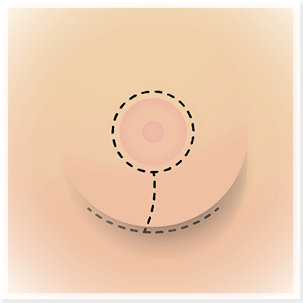
Inverted T Incisions

Also known as an “Anchor” incisions, an Inverted T incision pattern is typical for those seeking reduction surgery. Ideal for those with pendulous breasts or those with a considerable amount of excess skin and tissue, an Inverted T features incisions around the edge of the areola, an incision from the areola to the breast crease, and a third incision along the inframammary fold. This allows for the scar to be hidden under the remaining breast, with a scar that typically fades over time.

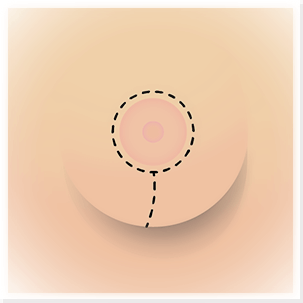
Vertical Incisions

Known also as the “Lollipop” technique, vertical incisions are ideal for women with moderate sagging of the breasts who desire some reshaping. This technique requires two small incisions – one circular incision around the outer edge of the areola and another vertical incision made from the bottom of the areola down to the inframammary fold (aka the natural breast crease). This type of incision makes it easy to remove excess skin and the resulting scars are modest and easily hidden.

What To Expect

What to Expect Before & After Surgery

Financing Available Through: Care Credit

During Your Consultation

You will meet with Dr. Vega’s staff to discuss your medical history, desired results, and options. You will then meet with Dr. Vega to review the methods available and select the one that will give you the best possible result.

Pre-Operation

One week before surgery you will meet with Dr. Vega’s staff for a pre-operative visit. You may be given prescriptions to fill; we may also take “before” photos. As always, we will answer any questions and discuss any concerns so that you feel completely confident as your surgery approaches.

Final Preparation

One day before your surgery, confirm the arrangements for your procedure (including transportation) and to prepare your home for a relaxing and comfortable recovery. On the day of surgery, you will meet with Dr. Vega again. He will review your procedure with you and perform an exam to confirm that you’re in good health for your surgery.

Surgery

Please plan to arrive early to check in and prepare for your procedure. You can expect to remain in the recovery room for several hours following completion of the surgery. When you get home, start taking your pain medication and antibiotics, and limit your activity for at least the next 24 hours.

Recovery

Dr. Vega will outline a recovery plan specific to your surgery. We will schedule follow-up appointments as necessary throughout your recovery. Dr. Vega will assess your healing, remove or change dressings, and document your results. Based on your progress, he will also let you know when you can expect to resume normal activities.

Ready to Take the Next Step? Schedule Your Consultation.

Book Your Consultation